

Writer: Aoi Suzuki
Table of Content
Introduction: Digital Marketing in Japan vs Canada Overview
Digital marketing in Japan vs Canada shows clear differences in strategy, content, and consumer behaviour.
After moving from Japan to Canada, I noticed that businesses communicate with customers in very different ways online.
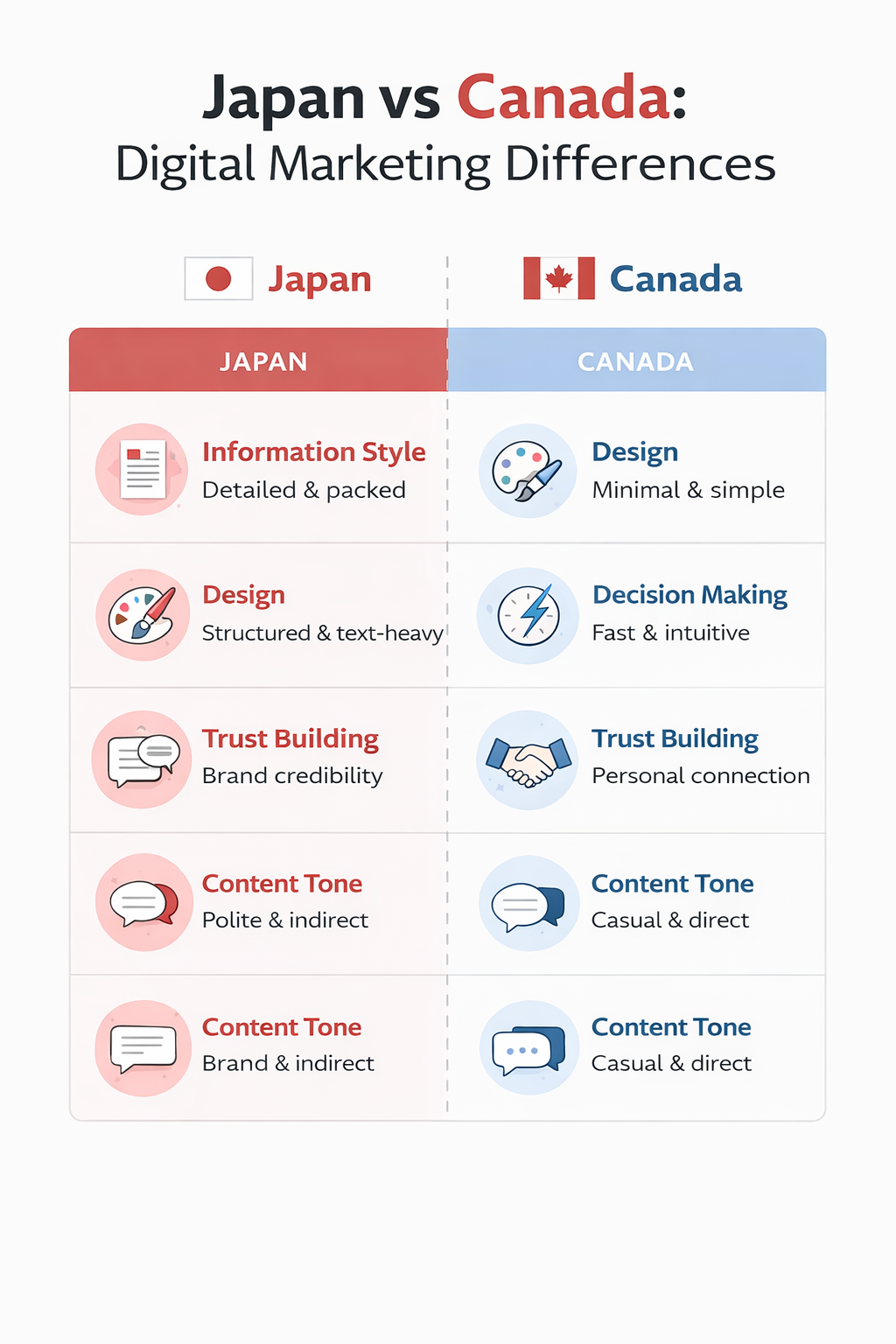
While Japanese marketing focuses on detailed information and building trust through clarity, Canadian marketing emphasizes simplicity, visual appeal, and emotional connection.
This article explores the key differences in digital marketing between Japan and Canada, including social media trends, consumer behaviour, and effective strategies for success in Canada.
These differences are not only about marketing techniques but also reflect deeper cultural values and communication styles.
1. Market Overview
To understand digital marketing in Japan vs Canada, it is important to look at the characteristics of each market.
Japan has a relatively homogeneous population, which allows companies to create consistent and standardized marketing messages. In contrast, Canada is highly multicultural, with diverse languages, cultures, and values. This makes marketing more complex and requires brands to adapt their strategies.
In addition, Canada is part of the North American market, which is highly competitive and mature. Companies need to constantly innovate to stand out, while Japanese companies often focus on maintaining long-term trust.
2. Social Media Trends in Digital Marketing in Japan vs Canada
Social media marketing also differs significantly between the two countries.
In Japan, LINE is one of the most widely used platforms, and brands use it for direct communication. Japanese content often includes colorful visuals, mascots, and highly designed layouts. Consistency and brand image are very important.
In contrast, social media marketing in Canada focuses on platforms such as Instagram, Facebook, and LinkedIn. Content is usually simple, clean, and visually driven. Instead of polished and perfect posts, brands often share casual and authentic content.
These differences reflect user preferences. Japanese users expect structured and informative content, while Canadian users prefer quick, engaging, and easy-to-understand posts.
3. Advertising Challenges in Canada
One of the key differences in digital marketing strategy in Canada is the low level of trust in traditional advertising.
Many consumers are skeptical of ads and tend to ignore them, especially if they feel intrusive. This makes it difficult for companies to rely on direct advertising.
Instead, marketers need to focus on alternative strategies such as influencer marketing, user-generated content, and storytelling. These approaches help build trust and create a more natural connection with the audience.
For example, instead of promoting products directly, brands in Canada often share real experiences or customer stories to increase engagement.
4. Content and Design Style in Japan vs Canada
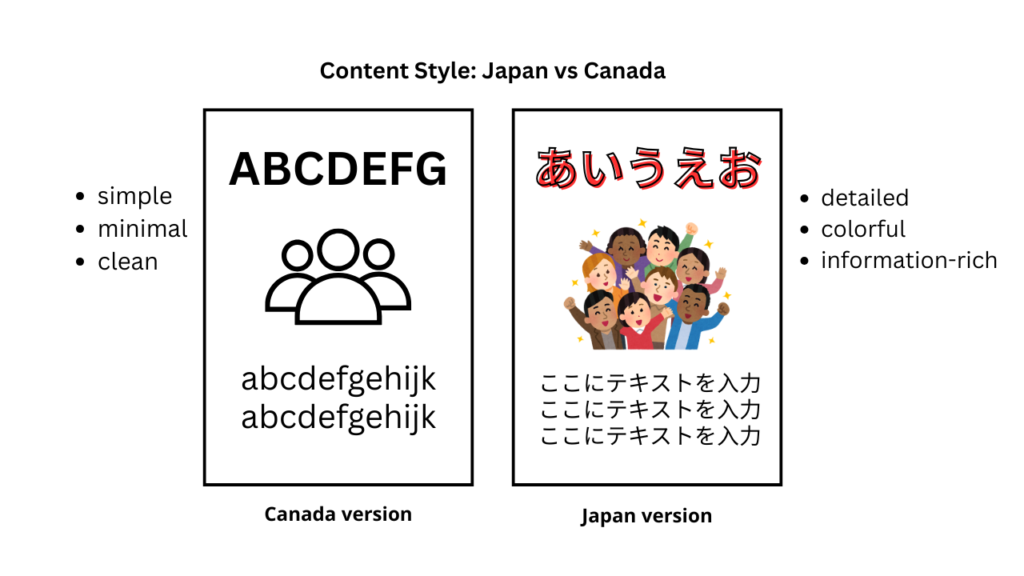
Content style is one of the most visible differences in marketing differences between Japan and Canada.
In Japan, digital content is often detailed and information heavy. Companies try to explain every aspect of a product to reduce uncertainty. Websites and advertisements often include a large amount of text and structured layouts.
In contrast, Canadian content is minimal and visually focused. Brands use strong images, short captions, and simple messages to capture attention quickly.
For example, Japanese websites may include long product descriptions and detailed explanations, while Canadian brands focus on visuals and key highlights.
This reflects differences in consumer behaviour in Japan vs Canada. Japanese consumers prefer to fully understand a product before purchasing, while Canadian consumers are more comfortable making quick decisions.
5. Trust and Consumer Behavior in Japan vs Canada
Trust building is another major difference in digital marketing in Japan vs Canada.
In Japan, trust is built through detailed information, brand credibility, and consistency. Consumers often compare multiple options and take time before making a decision.
In Canada, trust is built through authenticity and personal connection. People rely more on reviews, influencers, and real experiences.
As a result, Canadian consumers are more open to trying new products, while Japanese consumers tend to be more cautious and research-oriented.
6. Customer Approach and Marketing Strategy
Customer approach is also influenced by cultural differences in marketing.
In Japan, companies focus on building long-term relationships. Marketing emphasizes product quality, safety, and reliability to create a sense of security.
In Canada, marketing focuses more on individual experiences and emotional connection. Brands try to relate to customers through storytelling and lifestyle-based content.
This means that digital marketing strategy in Canada often requires a more personal and engaging approach.
7. Digital Marketing Environment in Canada
The digital marketing environment in Canada is highly developed and competitive.
There is strong demand for digital marketing professionals, and roles are often specialized, such as content marketing, social media management, and performance marketing.
In addition, many students gain practical experience through Co-op programs, which combine education with real work experience. This allows individuals to understand the local market and improve their skills.
Because of this competitive environment, marketers need to continuously learn and adapt to new trends.
Conclusion
Understanding digital marketing in Japan vs Canada is essential for global marketers.
To succeed in Canada, businesses should focus on simple and visual content, build trust through authenticity, and use social media effectively. Influencer marketing and storytelling are especially important.
Rather than applying the same strategies used in Japan, marketers need to adapt to local consumer behavior and cultural expectations.
By understanding these differences, businesses can create more effective digital marketing strategies and succeed in international markets.
These insights are especially helpful for students like me who are learning digital marketing in a global environment.
References
- Statista. (2024). Digital marketing trends worldwide.
- Datar portal. (2024). Digital 2024: Canada.
- Nielsen. (2023). Global Trust in Advertising Report.
- HubSpot. (2023). Consumer behaviour trends report.
- Pew Research Center. (2023). Social media and online behaviour.
- Shape Win Co., Ltd. (n.d.). Differences in marketing strategies between Japan and overseas. https://www.shapewin.co.jp/blog13234
- NoVo Weimar. (n.d.). Differences between Japanese and global marketing approaches. https://note.com/novoweimar/n/n1bcafdc2680d