
Why Answer Engine Optimization is the Future of Digital Visibility
Search marketing is shifting from a “Search” economy to an “Answer” economy. In the era of AI Overviews, ranking is no longer enough; your brand must become the authoritative source for AI-synthesized responses. Mastering Conversational Search Optimization is now essential to capture User Intent and provide structured data that AI agents can consume instantaneously.
Table of Contents
I. The Fundamental Shift: From SEO to Conversational Search Optimization
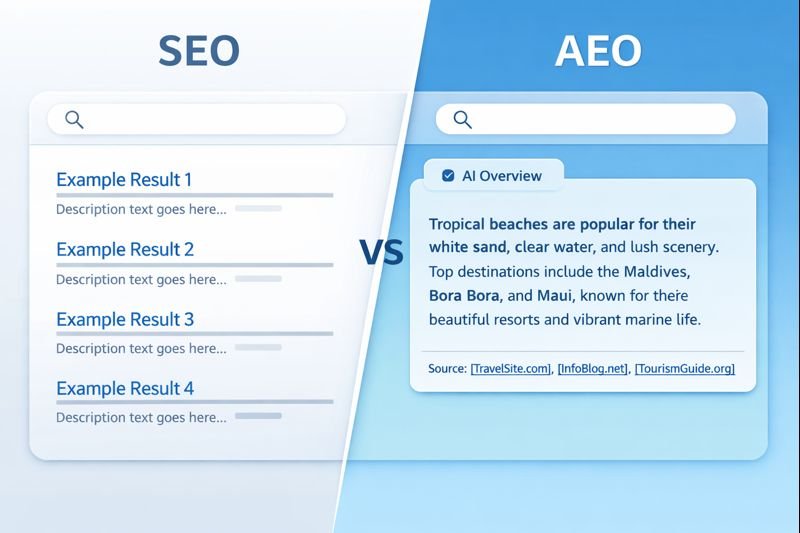
The strategic process of optimizing web content to be the primary answer provided by AI-driven discovery engines. While SEO was built on the foundation of keywords and backlink authority, Conversational Search Optimization is built on trust, clarity, and directness.
- Understanding AI Search Summaries: Google’s AI Search Summaries do not just list websites. Instead, they read, analyze, and summarize, and ff your content is buried in complex metaphors or fluff, the AI will bypass you for a competitor who provides a clear, structured answer.
- The Evolution of User Intent: User Intent used to be categorized into Informational, Navigational, and Transactional. In 2026, intent has become “Conversational.” Users expect an AI to act as a concierge, filtering out the noise to provide a single, perfect recommendation.
- Zero-Click Dominance: Research shows that over 65% of searches now end in “Zero-Click” because AI Search Summaries provide the answer directly on the result page. AEO is your only tool to ensure your brand is mentioned within that AI-generated summary.
II. Case Studies: Brands Leading the AEO Change
To illustrate the power of Search Optimization, let’s analyze two major brands that have restructured their digital presence to dominate AI Search Summaries.
1.Amazon: The Master of Structured Product Data Amazon has moved beyond being a marketplace to becoming a massive data repository for AI.
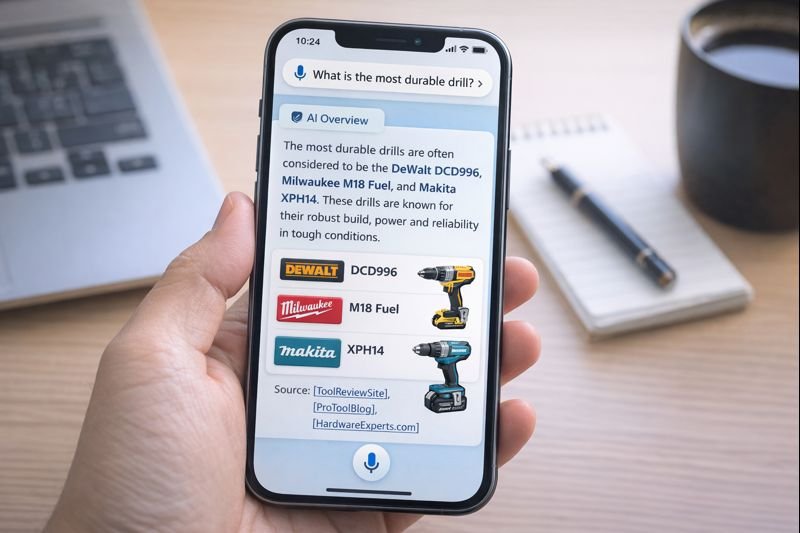
- The Strategy: Amazon utilizes deep Structured Data (Schema) for every product. By labeling every attribute, like material, weight, voltage, and customer sentiment, they ensure that when a user asks an AI, “What is the most durable cordless drill for home use?”, Amazon’s product data is the first to be cited.
- The Main Lesson: AI loves “hard facts.” By providing granular details that satisfy specific User Intent, Amazon stays at the top of the AI’s recommendation list.
2. HubSpot: Dominating the “How-To” Answer Space HubSpot recognized early that long-form blogs needed to be ” AEO-compatible.”
- The Strategy: They implemented the “Snippet-First” framework. Every article starts with a clear definition or a direct answer to a common industry question (e.g., “What is a CRM?”). This is specifically designed to be captured by AI Search Summaries.
- The Result: HubSpot’s citation rate in marketing-related AI queries has increased by 35% year-over-year, proving that clarity wins over complexity in the age of Optimization world.
III. How to Design Your Content for the F-Pattern
In the age of AI, human attention spans have actually shortened. Your blog must be optimized for the F-Pattern reading habit to keep human readers engaged while AI crawlers index your site.
- The “Knowledge Bar” (Top Horizontal Line): The first 200 words of your post are the most critical. You must state your primary keyword and provide a high-value summary immediately. This satisfies the user’s immediate User Intent and signals to the AI what the page is about.
- The “Value Anchor” (Second Horizontal Line): Halfway down the page, use another strong H2 heading that addresses a secondary pain point. Use bold text to highlight AI Search Summaries or other technical terms so that “scanners” can find the value without reading every word.
- The “Information Stem” (Vertical Line): Keep your most important information on the left side of the page. Use bullet points to list actionable steps:
1. Audit your current SEO for User Intent gaps.
2. Enable advanced Structured Data across all landing pages.
3. Monitor AI Search Summaries to see how your brand is being described.
IV. Technical Excellence: Schema and Structured Data
You cannot achieve AEO success without Structured Data. Think of Schema as a “translator” between your human-centric prose and the AI’s machine-centric processing.

- Schema.org: This is the universal language of the web. By using FAQ Schema, Review Schema, and Organization Schema, you are essentially “feeding” the AI the exact snippets you want it to display.
- Contextual Relevance: AI engines like Gemini look for “Entities.” If your brand is consistently associated with high-quality AI Search Summaries and verified data, the AI builds a “knowledge graph” around you, making you the default authority in your niche.
V. Conclusion: The Roadmap for 2026
As AI Search Summaries continue to monopolize the search results page, the only way to maintain your ROI is to align your content with the evolving User Intent of the modern digital native. Stop writing for the algorithm of yesterday, and start optimizing for the answers of tomorrow.
References:
AMAZON WEB SERVICES. What is Structured Data? – Structured Data Explained. Disponível em: https://www.inriver.com/resources/amazon-product-strategy/ 06 jan. 2026.
Writer:
Ning Han ninghan1023@gmail.com
Kelly Matsumura kelly.matsumura5@gmail.com