
Table of Contents
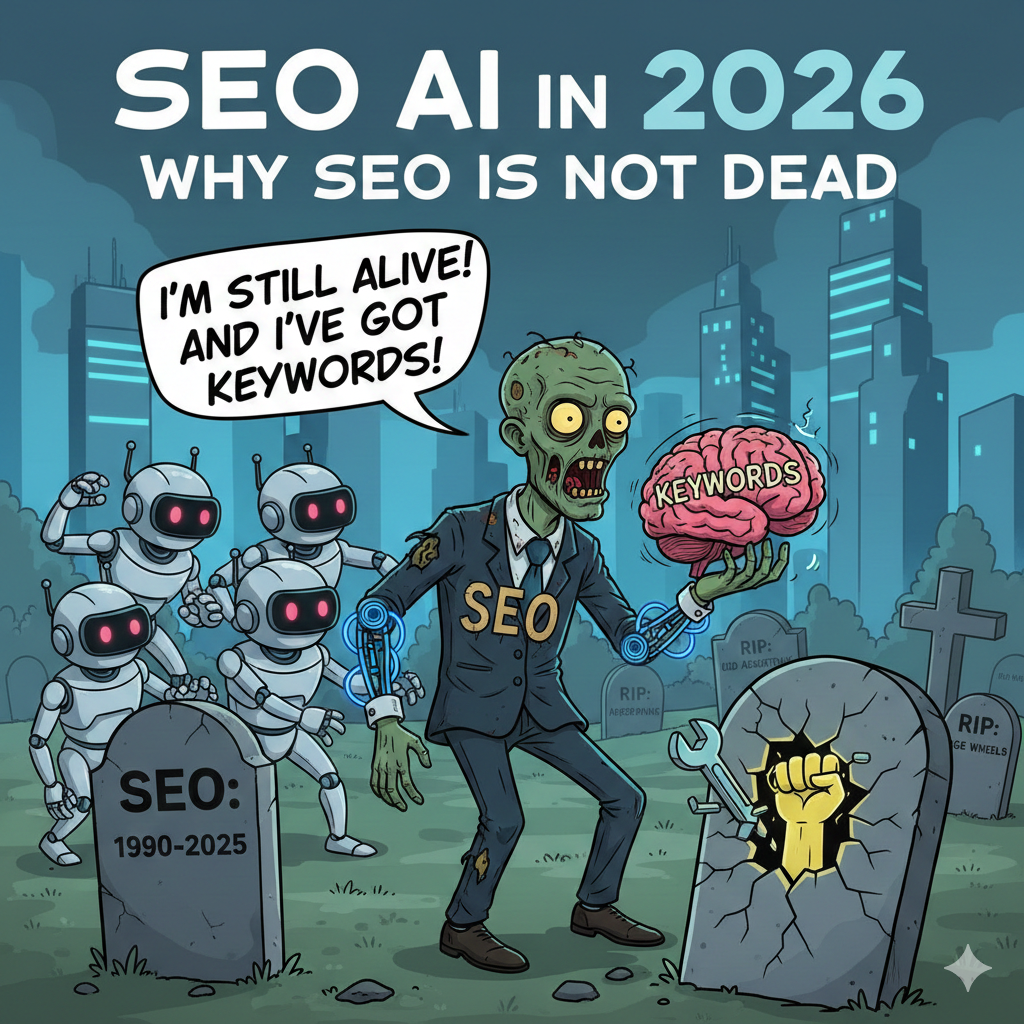
For the past few years, many people have claimed that SEO is dead. As AI and search engines continue to evolve, this belief has become even stronger. Features like Google AI Overviews now provide instant answers directly on the search results page, often without users clicking any links. For students and beginners learning AI Search Engine Optimization (SEO) today, this shift can feel confusing.
At first glance, this shift makes traditional SEO seem less relevant. If users no longer visit websites, why should businesses still invest in SEO?
However, this conclusion misses a key point.
SEO is not dead in 2026. It is evolving alongside AI.
This article aims to help beginners, students, and marketers better understand how AI Search Engine Optimization (SEO) works today, and why SEO still plays a critical role in modern search.
Why Search Engine Optimization Is Not Dead
SEO is often misunderstood as a tactic focused only on rankings and keywords. In reality, SEO has always been about helping search engines understand content and match it with user intent.
That fundamental purpose has not changed.
Even with AI-powered search experiences, people still rely on search engines to ask questions, compare options, and seek trustworthy information. AI does not remove search behavior. It reshapes how results are delivered.
More importantly, AI search systems do not generate knowledge from nothing. They depend on existing content that is:
- Indexed by search engines
- Clearly structured
- Accurate and relevant
- Trusted and authoritative
Without well-optimized content, AI systems would have nothing reliable to summarize or reference.
This is why AI search optimization does not replace SEO. Instead, it strengthens its importance. SEO is no longer about producing large volumes of content, but about creating content that deserves to be selected.
SEO in 2026 is less about visibility through clicks and more about visibility through credibility and relevance.
The Role of AI Search Engine Optimization
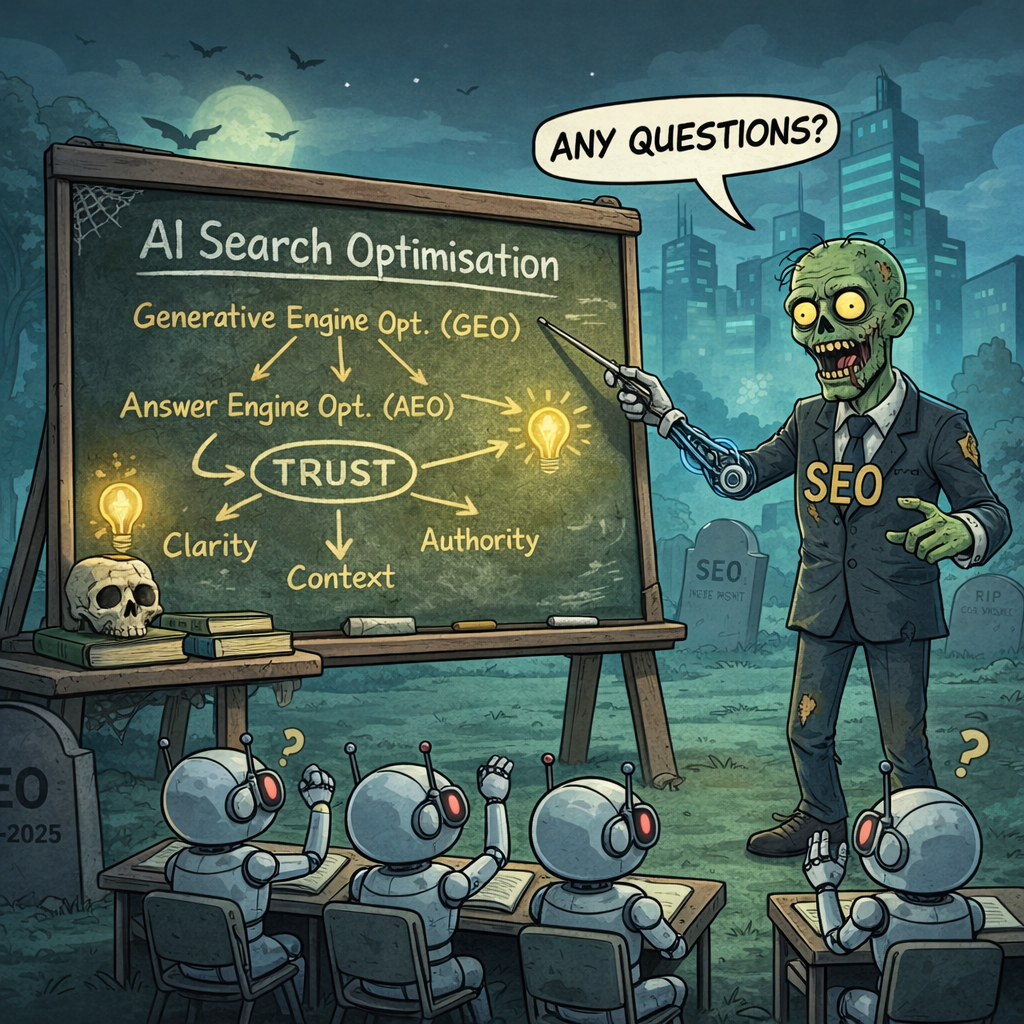
AI Search Engine Optimization refers to how search engine optimization adapts to AI-driven search experiences. Instead of focusing only on rankings, SEO AI considers how content is interpreted, summarized, and presented by AI systems.
This evolution introduces new concepts that expand traditional SEO thinking, rather than replace it.
1. GEO: Generative Engine Optimization
Generative Engine Optimization (GEO) focuses on optimizing content so that AI engines can accurately understand and use it when generating answers.
Unlike traditional SEO, which aims to rank pages, GEO aims to ensure content is included and referenced in AI-generated responses.
GEO prioritizes:
- Clear topic focus
- Logical content structure
- Context-rich explanations
- Consistent and reliable information
AI engines favor content that is easy to interpret and summarize. Articles that clearly explain concepts, define terms, and stay on topic are more likely to be selected.
In practice, writing for GEO often means writing better content for humans first, while keeping structure and clarity in mind.
2. AEO: Answer Engine Optimization
Answer Engine Optimization (AEO) focuses on how content answers specific questions within AI-powered search environments.
As search becomes more conversational, users are increasingly asking complete questions rather than typing short keywords. AI systems then prioritize content that provides direct, clear answers.
AEO emphasizes:
- Question-based content
- Concise explanations
- Natural language
- Clear formatting such as lists or definitions
For example, questions like “Is SEO dead in 2026?” or “What is SEO AI?” are more likely to trigger AI-generated answers. Content that directly addresses these questions improves its chances of being selected.
AEO helps content move from being ranked to being recognized as the best answer.
3. Google AI Overviews and Changing Visibility
Google AI Overviews represent one of the biggest changes in search presentation. Instead of showing only a list of links, Google now provides AI-generated summaries at the top of the results page.
This has led to concerns about zero-click searches and declining traffic. While these concerns are valid, they do not mean SEO is obsolete.
AI Overviews still rely on content from trusted sources. Being referenced in these summaries increases brand credibility and visibility, even if users do not immediately click through.
As a result, SEO value is expanding beyond traffic metrics. Visibility now includes being recognized as a reliable source within AI-generated results.
Traditional SEO vs AI Search Engine Optimization
To understand how SEO has evolved, it is helpful to briefly compare traditional SEO with AI search engine optimization.
Traditional SEO focused on ranking web pages through keywords, backlinks, and technical signals.
AI search engine optimization shifts the focus toward understanding search intent, context, and trust, reflecting how modern AI-driven search engines evaluate content.
Rather than replacing traditional SEO, AI search engine optimization builds on its foundation by expanding what “optimization” means in today’s search environment.
| Aspect | Traditional SEO | AI Search Engine Optimization |
| Main goal | Rank pages in search results | Select the best answer for users |
| Keyword focus | Exact keywords | Search intent & semantics |
| Content priority | Page-level optimization | Meaning, clarity, and context |
| Search behavior | Keyword-based | Conversational & question-based |
| Visibility | Clicks and traffic | AI summaries & answer inclusion |
| Role of trust | Important | Essential |
How to Create Content for AI Search Engine Optimization in 2026
So, how should content be written for SEO AI in 2026?
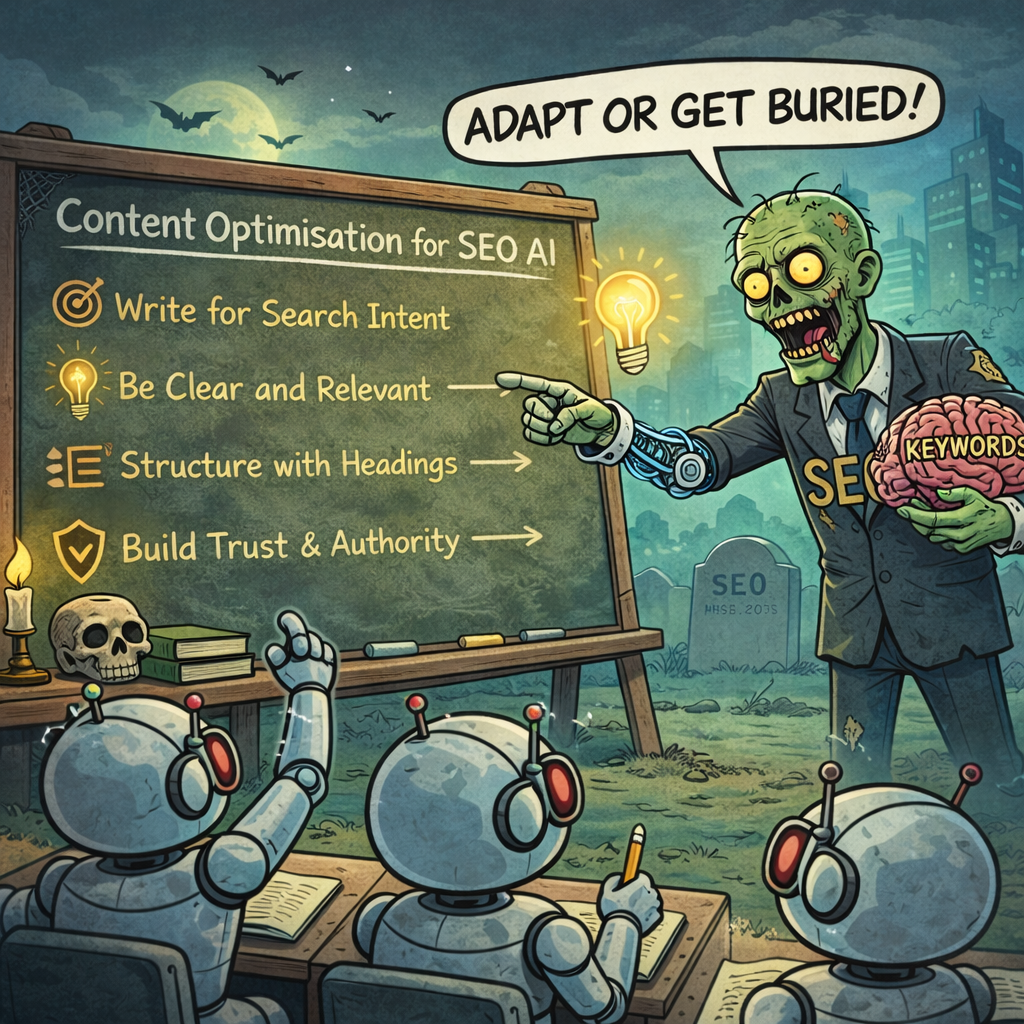
An effective SEO strategy in 2026 focuses on how AI systems evaluate meaning, context, and trust. Content optimization for AI search is no longer about producing large volumes of content, but about creating content that is clear, relevant, and reliable.
1. Focus on Search Intent
SEO AI prioritizes user intent over exact keyword matching. Instead of repeating keywords, content should address what users are genuinely trying to understand or solve.
Strong AI search optimization explains concepts clearly and answers real questions.
2. Write for Clarity and Context
AI systems favor content that is easy to interpret and rich in context. Clear definitions, consistent terminology, and logical explanations improve both AI understanding and user experience.
Clarity builds credibility, and credibility drives visibility.
3. Structure Content for AI Understanding
Clear headings and concise paragraphs help AI identify key topics and relationships within content.
Well-structured pages support both Generative Engine Optimization and Answer Engine Optimization, increasing the likelihood of being referenced in AI-generated results.
4. Build Trust Through Accuracy and Authority
Trust is essential in AI-driven search. Accurate information and consistent messaging help content earn long-term relevance.
In content optimization for AI search, authority matters as much as relevance.
Conclusion
SEO is not dead in 2026. It is evolving.
As AI reshapes how search results are generated and displayed, SEO shifts toward clarity, intent, and trust. SEO AI does not eliminate optimization. It raises the standard.
For students, beginners, and marketers, the message is clear.
The future of SEO belongs to content that deserves to be understood, trusted, and selected by both users and AI systems.
In the age of SEO AI, better content is not optional.
It is the strategy.
If you want to deepen your understanding of SEO beyond theory, the SEO Keyword Challenge or visit to Steven Workshops is a helpful tool for practicing keyword research and search intent in real scenarios.
References
TheeDigital. (2025). SEO Trends: SEO Transformation and AI Impact in 2026.
https://www.theedigital.com/blog/seo-trends
Leadfeeder. (2025). State of SEO in 2026: Trends and Predictions.
https://www.leadfeeder.com/blog/state-of-seo
Search Engine Journal. (2025). How AI Is Changing SEO.
https://www.searchenginejournal.com/ai-search-seo/
Writer
Ting Chang: https://tingdesign.cargo.site/
Sena Jung: https://sseooy1230.wixsite.com/my-site